
Why Does a CA Firm Need Practice Management Software?
Spreadsheets and WhatsApp groups get a CA firm through its first few clients. Past that, missed deadlines, scattered documents and billing that trails the work by weeks stop being occasional problems and start being the normal week.
Last reviewed 24 August 2026
Quick Answer
A CA firm needs practice management software once spreadsheets and WhatsApp can no longer reliably answer who owns a task, when it's due and what was promised to a client. Below a certain size, informal coordination works fine. Past it, the same coordination starts costing missed deadlines, duplicated work and client trust.
What Is Practice Management Software?
Practice management software is a single system that holds a CA firm's client records, tasks, recurring compliance work, billing and team communication, instead of each of those living in its own spreadsheet, chat thread or inbox. It isn't accounting software, it doesn't do the client's books. It's the system that runs the firm itself: who's working on what, for which client, by when.
A Small Firm Genuinely Doesn't Need This Yet
Two or three people who sit near each other can coordinate by talking. A spreadsheet is enough when everyone already knows everyone else's workload. The problems described in this article show up at a specific point, not on day one, and there's no reason to add a system before a firm actually feels the friction it solves.
The Signs a Firm Has Outgrown Spreadsheets
Partners ask "what's the status of this client?" out loud, because there's nowhere to check
A GST or TDS deadline gets caught the day before, not the week before
Two people work on the same client task without knowing it
Client documents live across someone's inbox, a shared drive and a WhatsApp chat
Billing happens weeks after the work is actually done
A new hire takes weeks to understand who's responsible for what
None of these are dramatic on their own. They're small enough to dismiss individually, which is exactly why they tend to pile up before anyone treats them as one problem.
What Running on Memory Actually Costs a Firm
Time
Hours spent every week reconstructing status instead of doing the work itself.
Compliance Risk
A missed GST or TDS deadline because nobody was explicitly watching it.
Client Trust
A client who has to ask twice for an update, because the firm couldn't answer the first time.
Partner Blind Spots
Not knowing which clients or team members need attention until something goes wrong.
Why This Hits CA Firms Harder Than Most Businesses
Recurring, Not One-Off
GST, TDS, Income Tax and ROC work repeats every cycle. A system that remembers the pattern beats a person remembering it from scratch each time.
High Message Volume
Client requests arrive constantly over WhatsApp and email. Software that turns a message into tracked work prevents requests from quietly disappearing.
Sensitive Data at Scale
DSCs, passwords and client credentials multiply with every client. Storing them in spreadsheets is a security problem, not just an inconvenience.
Seasonal Pressure
Filing season concentrates deadlines into a short window. A firm running on memory has the least slack exactly when it needs the most.
500s of CA firms use Turia Practice every day












Independently reviewed by CA firms using Turia:
What Changes Once a Firm Adopts It
| Before | After |
|---|---|
| Status lives in someone's head | Status lives in the system |
| Deadlines depend on memory | Deadlines generate their own reminders |
| Documents scattered across tools | Documents attached to the client record |
| Billing trails the work by weeks | Billing starts from completed work |
| New hires take weeks to ramp up | New hires see the same system everyone else does |
What Is Turia?
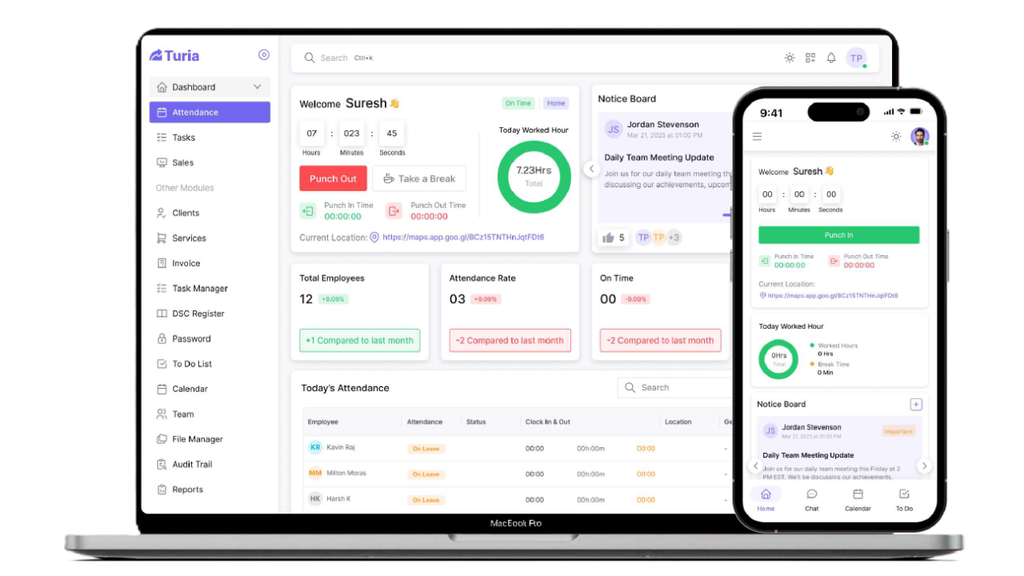
Turia is practice management software built specifically for Indian CA and CS firms, connecting client management, tasks, compliance, notices, billing and team communication in one system, rather than requiring a separate tool for each. If any of the signs above sound familiar, see how Turia compares to other options and how firms already using it describe the switch.
Frequently Asked Questions
Why does a CA firm need practice management software?
Because past a certain size, spreadsheets and WhatsApp stop being able to answer basic questions, who owns this task, when is it due, what did we tell this client, reliably. Practice management software keeps client work, deadlines and communication in one place instead of scattered across tools.
Is practice management software worth it for a small CA firm?
It depends on team size more than firm age. A 2 to 3 person firm can often manage informally. Once a firm has 5 or more people, or several partners, informal coordination usually starts breaking down.
What happens if a CA firm doesn't use practice management software?
Work still gets done, but it depends on individual memory and manual follow-up. That usually shows up as missed deadlines, duplicated work, slow billing and partners who don't have visibility into what the team is actually doing.
What are the signs a CA firm has outgrown spreadsheets?
Common signs include partners not knowing client status without asking, deadlines caught at the last minute, documents scattered across tools, and new hires taking weeks to understand who owns what.
Can a CA firm switch from Excel to practice management software without losing data?
Yes. Client records, active tasks and recurring workflows are typically migrated during onboarding, so the switch doesn't mean starting over.
Does practice management software replace WhatsApp and email for client communication?
Not entirely. It connects to them instead, converting a WhatsApp message or email into a tracked task, so the request doesn't stay only in the chat thread.
See What Changes When Status Lives in the System
Try Turia with your firm's real clients and tasks.
Further Reading
10 Problems CA Practice Management Software Solves
A detailed breakdown of the 10 problems that make practice management software essential for CA firms.
CA Practice Management Software in India: 2026 Guide
The research-backed case for why every Indian CA firm needs dedicated practice software in 2026.
Top 10 CA Practice Management Software in India 2026
A ranked list of the best practice management options for CA firms evaluating a switch.